Less manual work. More time for what matters.
At KreaSpecs, we help businesses reduce manual work by connecting existing systems and automating repetitive processes.
From transferring information between platforms to managing internal approvals and customer follow-ups, we develop practical automation solutions that make everyday operations easier to manage.
Based in Thailand, our team works with businesses to improve how their existing systems and processes operate. Where appropriate, we also integrate AI to handle tasks that involve interpreting information, preparing responses or working with unstructured data.
Technology keeps advancing. But are business processes keeping up?
Many businesses rely on several platforms that don’t communicate with each other. Information needs to be entered more than once, employees spend time checking whether tasks have been completed, and routine processes depend on someone remembering the next step.
These small inefficiencies add up, particularly when multiple teams are involved.
Introducing another software platform doesn’t necessarily solve the problem. In some cases, it simply adds another system for employees to manage.
The challenge is knowing which processes are worth automating, which systems need to communicate and where human involvement is still necessary.
Connect the processes. Simplify the work.
We start by understanding how a task is currently handled, who is involved and which systems are used.
From there, we identify steps that can be automated without making the process unnecessarily complicated. This might involve connecting two platforms, replacing manual data entry with an automated workflow or introducing AI to help process incoming information.
Not every process requires artificial intelligence. Some tasks are better handled through straightforward, rule-based automation, while others benefit from AI capabilities.
Our solutions are developed around the tools and working practices already in place, with human review included wherever it’s needed.
Find the opportunities behind everyday work.
Not every inefficient process needs a new system. Sometimes the biggest improvements come from changing how existing tools are used.
We review how teams manage their daily work, where information is entered or transferred manually and which tasks regularly cause delays.
Based on these findings, we recommend business process automation opportunities that are practical to implement and worth the investment.
Reduce repetitive work. Improve consistency.
Many businesses still rely on employees to move information between systems, send routine notifications and update records manually.
For example, when a form is submitted, a customer record may need updating, a team member needs notifying and a follow-up task needs creating. These steps often follow the same sequence every time.
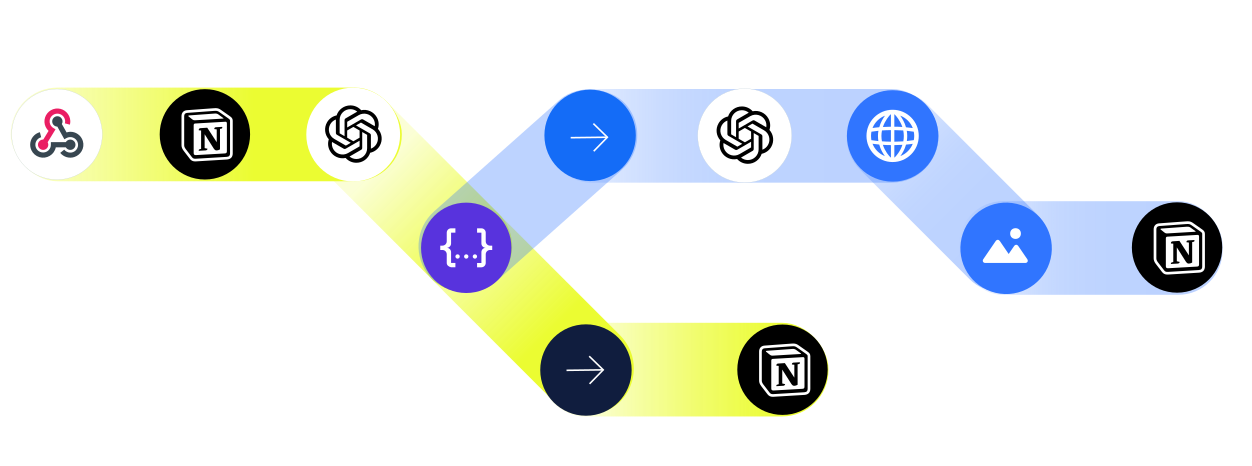
We develop workflow automation solutions that connect platforms and trigger the next action automatically. This can include internal approvals, task assignments, data transfers and notifications, helping teams spend less time on repetitive administration.
Use AI where it makes a practical difference.
Traditional automation works well when tasks follow predictable rules. AI becomes useful when a process involves information that needs to be interpreted.
We integrate AI into workflows to help categorize incoming requests, extract information from documents, summarize content or prepare draft responses.
For example, AI can help process an incoming customer inquiry, identify the subject and prepare information for the appropriate team.
Where necessary, employees review the output before the workflow continues, keeping important decisions under human control.
Connect customer interactions with business operations.
A new inquiry might arrive through a website form, require an update in the CRM and need a follow-up from the sales team. Without connected systems, each step can involve manual work.
We develop automations that link lead capture, CRM records, customer segmentation, email follow-ups and internal notifications.
This helps businesses manage customer communication more consistently while reducing the administrative work behind it. Teams can spend less time transferring information and more time responding to customers.